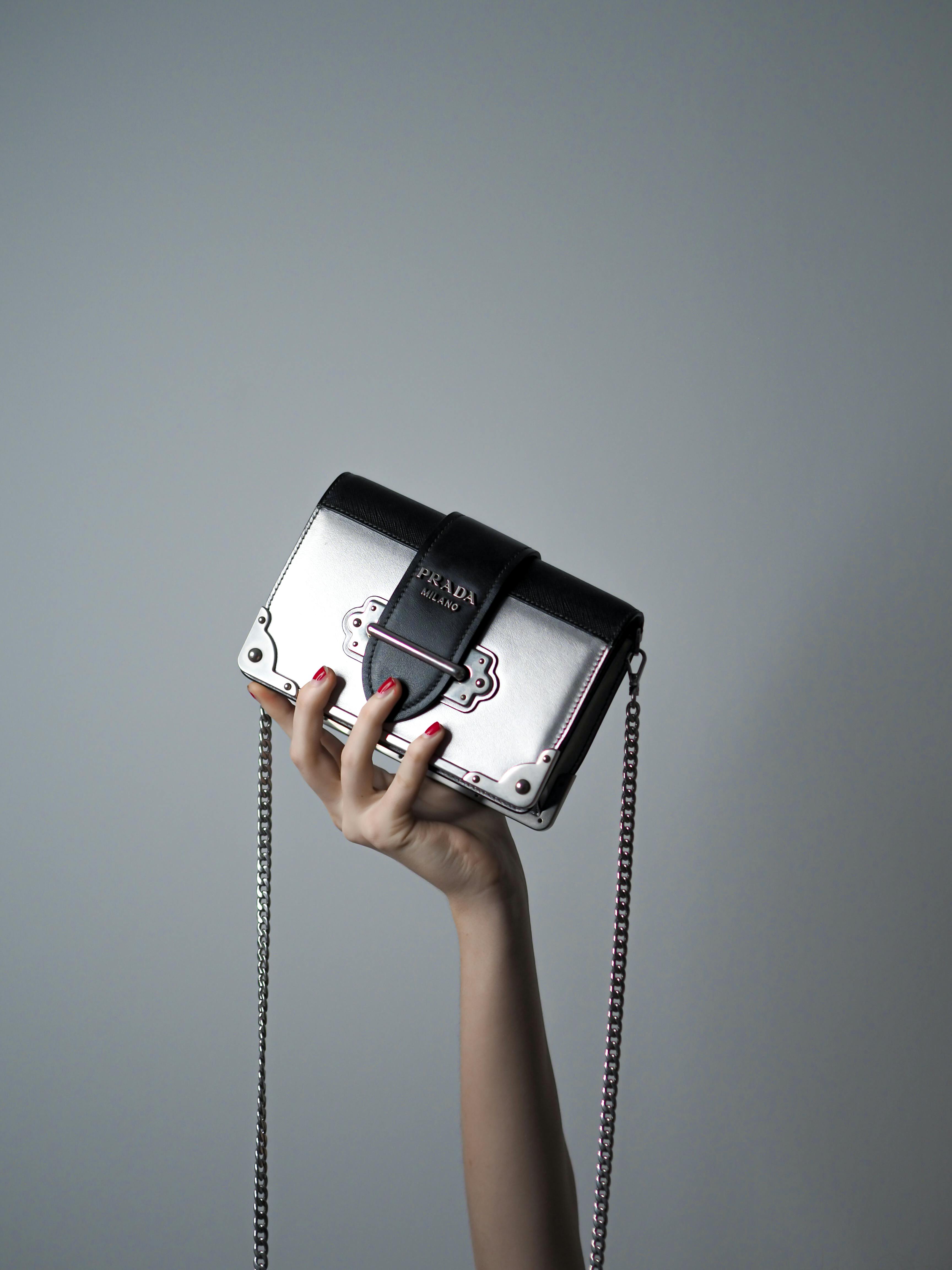
The Prada Galleria: Saffiano Engineering and the Minimalist Utility Matrix
Representing a radical departure from the romantic, artisanal narratives of classical French luxury houses, the Prada Galleria bag—introduced in 2007—is an exploration of industrial leather engineering, German material precision, and late-twentieth-century institutional minimalism. Named after the historic Galleria Vittorio Emanuele II in Milan where Mario Prada opened his first boutique in 1913, the bag’s primary material foundation is Saffiano leather, a cross-hatched calfskin leather that underwent a patented preparation process originally developed by Mario Prada himself. The leather is treated with a specialized wax compound and then hot-stamped with a fine diagonal cross-hatch texture, a process that dramatically alters the material's mechanical properties, rendering it highly resistant to scratches, water saturation, and thermal degradation. The structural architecture of the Galleria is built around a tripartite internal configuration, featuring two deep outer compartments secured by heavy-gauge brass zippers alongside a centralized open-access bay. This internal spatial segmentation represents an advanced ergonomic layout that accommodates the changing needs of professional women transitioning into the digital information age, contrasting sharply with the single-chamber design of historical luxury bags. The visual branding is highly restrained, centered on the iconic inverted enamel triangle logo plate, which is securely anchored by two rear rivets through a reinforced leather backing panel. The structural edges of the Galleria are sealed with multiple coats of tonal matte edge paint (tintura), applied by hand to protect the exposed leather plies from moisture ingress and structural fraying. From an industrial design perspective, the Galleria is highly praised for its exceptional resistance to daily wear and its highly rationalized interior taxonomy. However, critics note that the heavy industrial wax coatings and dense internal lining elements contribute to a relatively high baseline weight before any personal cargo is introduced, embodying an intellectual tension between industrial durability and lightweight comfort.