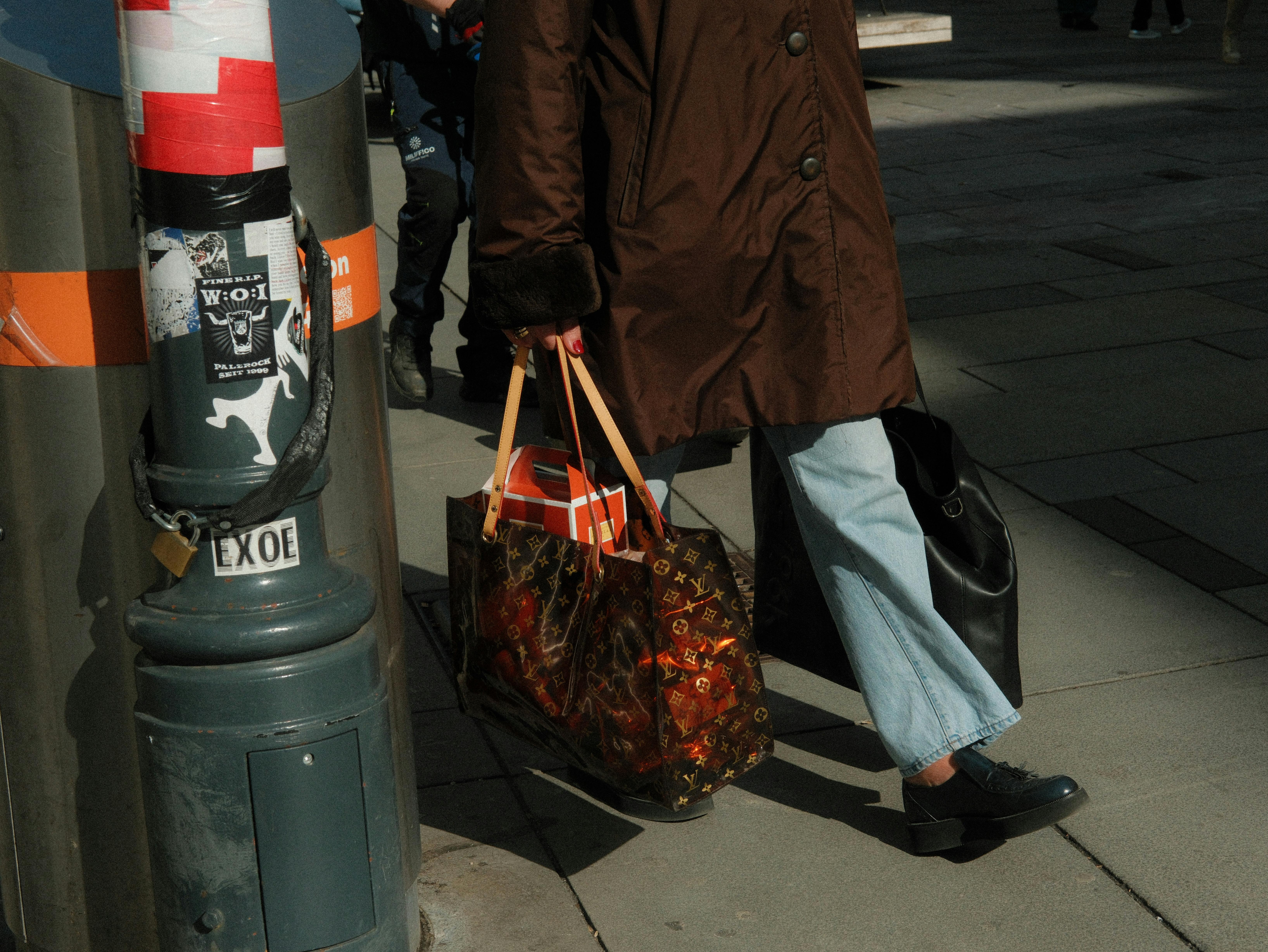
The Louis Vuitton Speedy: Canvas Innovation and the Genesis of Modern Travel Wear
Tracing its morphological roots to the rapid acceleration of industrial transportation systems in the early twentieth century, the Louis Vuitton Speedy represents a vital evolutionary bridge between traditional heavy luggage craftsmanship and modern everyday leather goods. Introduced in 1930 as the 'Express'—a direct response to the era’s obsession with transcontinental automotive and rail travel—the bag was a downsized adaptation of the larger Keepall duffle. The core technological innovation of the Speedy lies not in leather manipulation, but in its utilization of woven cotton canvas coated with a proprietary polyvinyl chloride (PVC) compound, featuring the historic Monogram pattern designed in 1896. This composite material engineering creates an incredibly lightweight, completely waterproof, and highly abrasion-resistant exterior textile that physically outperforms traditional unprotected leathers in volatile environmental conditions. The structural architecture relies on a continuous, single piece of canvas wrapping from the front to the back, resulting in an upside-down orientation of the monogram motif on the reverse side—a unique manufacturing characteristic that defies conventional symmetrical construction norms. The bag's structural rigidity is entirely reliant on its tubular vachetta leather handles and leather piping seams, which provide an external skeleton to an otherwise collapsible, unstructured interior volume. Over nearly a century, the Speedy's profile has undergone subtle geometric updates, transitioning from a purely soft-sided travel accessory to a structured urban handbag via the introduction of internal baseboards and organizational liners by contemporary consumers. From an industrial perspective, the Speedy demonstrates how a design rooted in maritime and rail utility can adapt to high-density urban environments. However, an objective evaluation highlights that its open interior void lacks contemporary internal compartments or secure laptop sleeves, presenting an archival, non-segmented storage philosophy that prioritized volume over compartmentalized digital ergonomics, remaining an unyielding monument to mid-century industrial geometry.