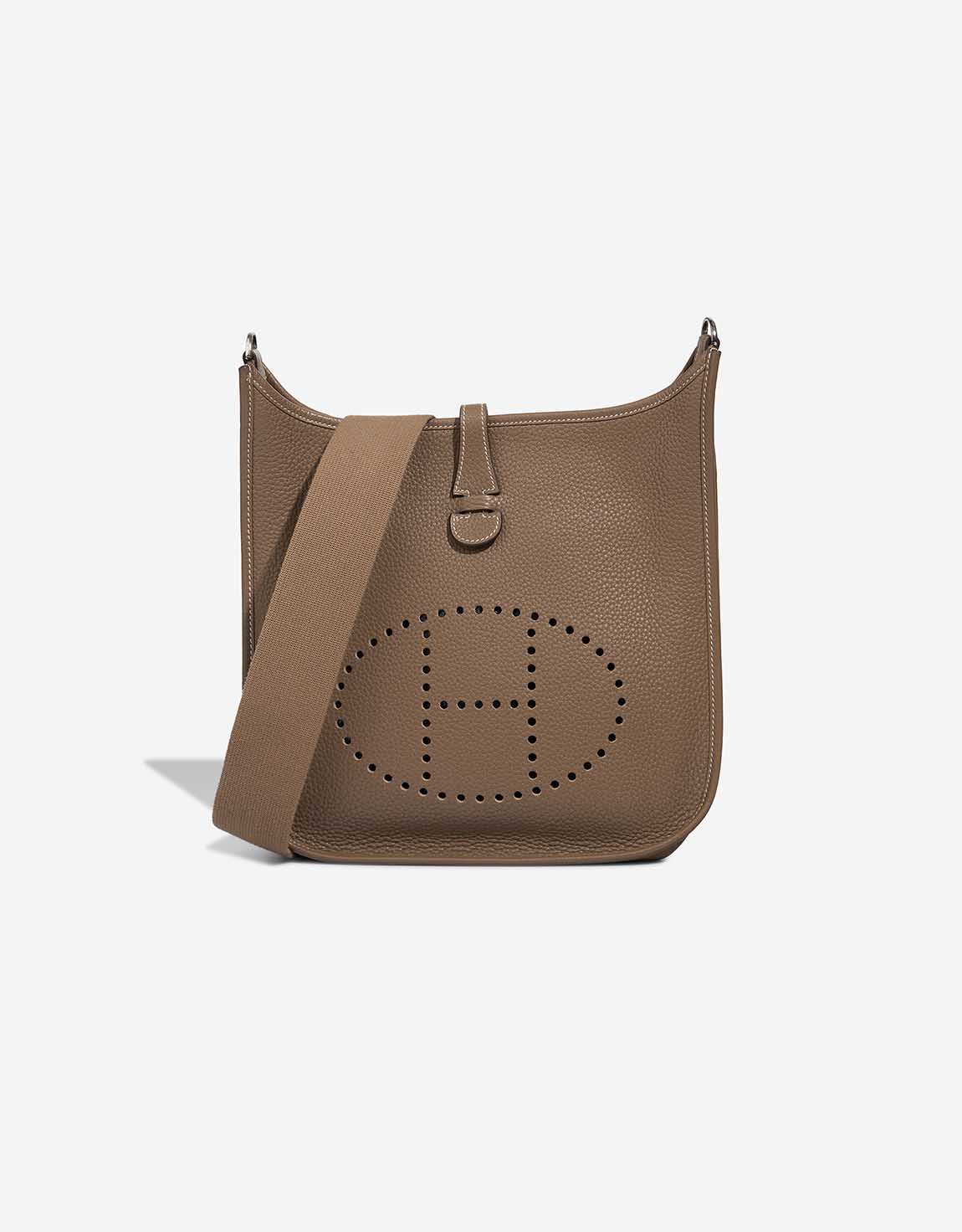
The Hermès Evelyne: Equestrian Ventilation Technology and the Semiotic Inversion of Luxury
Originally conceived in 1978 by Évelyne Bertrand, the head of the Hermès equestrian department, the Evelyne bag serves as a brilliant, highly subversive case study in how a purely utilitarian, livestock-grooming accessory was progressively transformed into a premier icon of modern urban hands-free luxury. The original design blueprint of the Evelyne was explicitly engineered to serve as a practical carrying pouch for horse grooming tools, such as currycombs, brushes, and scrapers. The defining technical characteristic of the vessel is the massive, perforated 'H' initial logo consisting of exactly sixty-three perfectly laser-cut or punched circular holes configured across the front panel. This element was not originally designed for brand signaling; rather, it was engineered as a critical ventilation matrix intended to face inward against the groom's body, allowing air to circulate freely through the bag to dry wet horse brushes and prevent fungal growth or leather rot within the interior cavity. The construction methodology relies on an unlined, single-layer pouch structure cut from heavy-duty, highly resilient Clemence or Maurice taurillon leather, which provides exceptional flexibility and scratch resistance. The bag completely eschews rigid internal frames, zippers, or traditional hardware closures, utilizing instead a simple leather tab secured by a solid brass press-stud button. From an industrial and sociological perspective, the Evelyne represents an extraordinary semiotic inversion; contemporary fashion culture has rotated the bag one hundred and eighty degrees, wearing the functional ventilation holes facing outward as a prominent brand indicator. However, an objective utility assessment notes that the unlined, single-chamber layout lacks any internal organizational taxonomy, and the large perforation holes expose the interior cavity to environmental dust and rain if objects are not placed within secondary internal organizers, illustrating a clear tension between industrial agricultural heritage and modern urban containment demands.