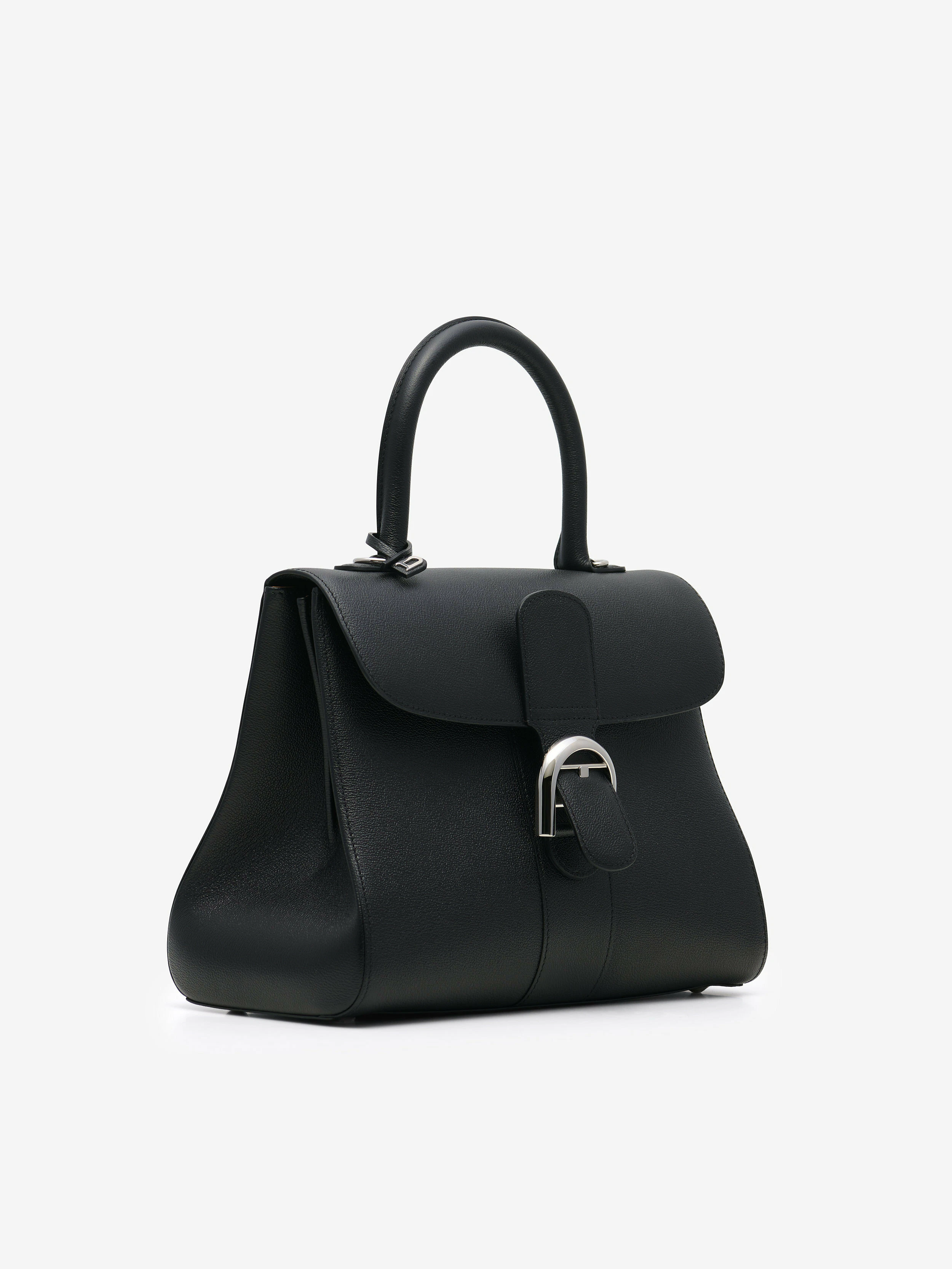
The Delvaux Brillant: Surrealist Geometry and the Architectural Trapeze Assembly
Commissioned in 1958 for the Brussels World Fair (Expo 58) and designed by renowned architect Paule Goethals, the Delvaux Brillant stands as one of the oldest, most complex, and structurally demanding masterpieces of high-end leather architecture in the global luxury landscape. Heavily influenced by the soaring, radical modernist structures of mid-century architecture and the underlying spirit of Belgian surrealism, the Brillant is characterized by its dramatic, flared trapeze silhouette constructed from exactly sixty-four separate, pre-shaped pieces of high-density box calfskin or premium vegetal-tanned leathers. The structural core of the bag is an unyielding, hard-sided box framework that utilizes double-reinforced internal fiberboard panels to prevent any structural bowing or collapsing over decades of use. The defining visual and mechanical signature of the Brillant is its oversized, horseshoe-shaped central buckle, which loops through a thick vertical leather tongue on the front flap. This buckle is cast from solid brass and operates as a highly traditional, non-magnetic prong closure that requires a precise, physical manual threading sequence to secure the vessel. The technical execution of the top handle is a legendary feat of craftsmanship; it features an intensely curved, multi-layered leather arc that is skived, stitched, and painted entirely by hand to achieve an ergonomic grip capable of enduring significant vertical load stresses without deformation. Critically analyzed, the Delvaux Brillant is a triumph of pure sculptural discipline and historical engineering permanence. However, an industrial utility assessment notes that the rigid, unyielding nature of the boxy trapeze base combined with a slow, mechanical prong buckle closure renders it poorly adapted to the fluid, rapid-access demands of contemporary digital lifestyles, remaining instead a monumental artifact of slow-paced, mid-century formal luxury.