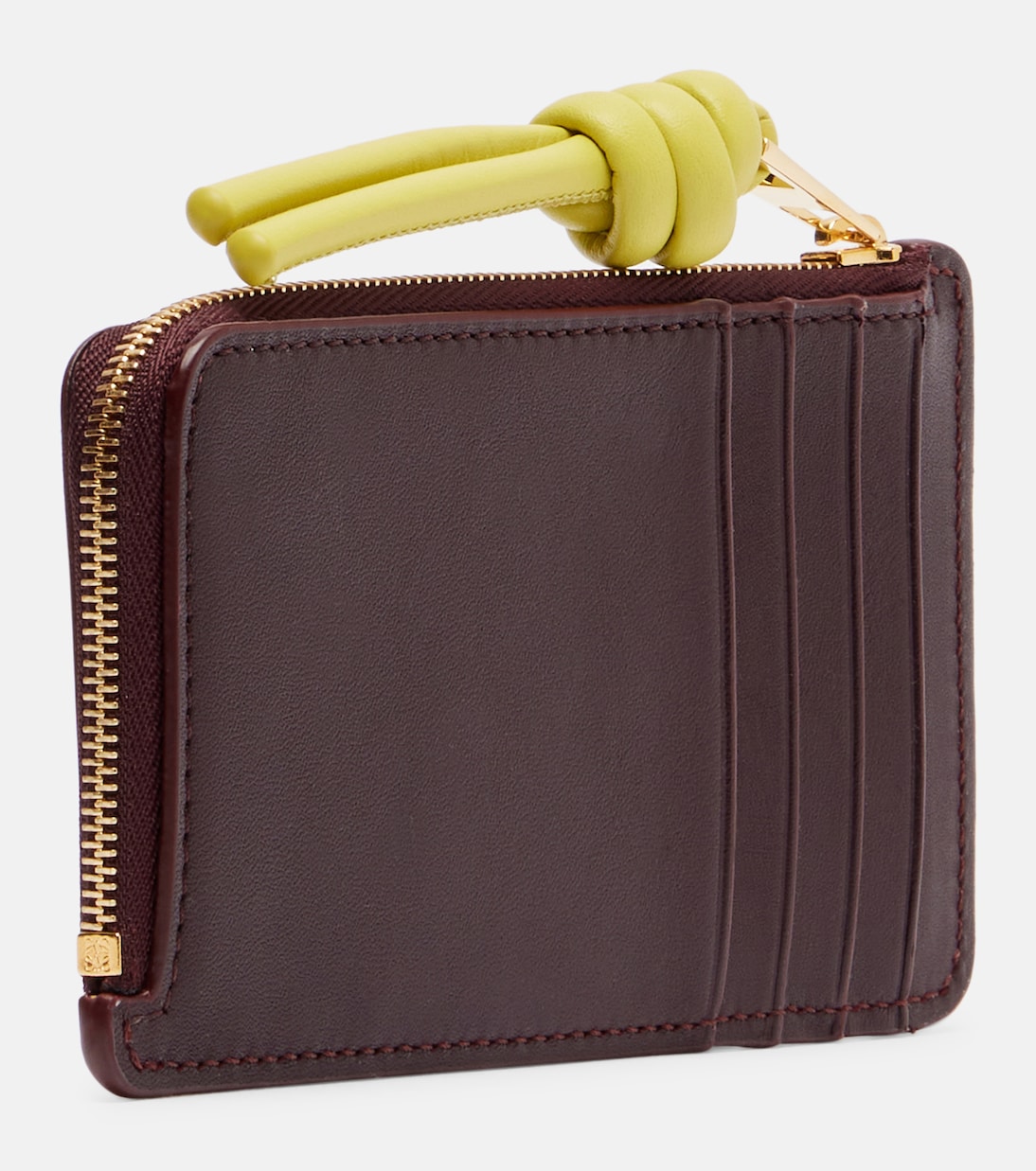
The Loewe Gate: Equestrian Saddle Re-Engineering and the Functional Leather-Knot Tension Girdle
Introduced for the Spring/Summer 2018 collection by Jonathan Anderson, the Loewe Gate bag stands as a masterclass in modern equestrian saddle-bag re-engineering, structural ingenuity, and the substitution of metal hardware closures with pure material tension systems. Named after a prominent metallic side pin latch that pierces the upper left lateral hinge, the bag’s structural profile is defined by a deeply curved, semi-rigid crescent base constructed from premium soft-grained calfskin or smooth box leathers. The primary design innovation and mechanical linchpin of the Gate bag is the wide leather strap that wraps horizontally across the front flap, terminating in a complex, hand-tied structural knot. This leather girdle is not merely ornamental; it serves as the bag's actual mechanical closure system, generating precise surface tension that holds the front flap securely flat against the body without the weight or aesthetic distraction of magnetic snaps, metal turnlocks, or zipper lines. To access the raw leather-lined interior cavity, the user must slide the front flap vertically out from underneath the knotted leather tension belt. The structural articulation of the Gate is further enhanced by an internal divided timeline featuring a dual-compartment layout and a specialized rear slip pocket for flat documents. From an industrial design perspective, the Gate bag is highly celebrated for its brilliant organic architecture and its reliance on primitive leathercraft physics over mechanized closures. However, an objective material analysis indicates that because the front flap must be continuously slid underneath the tightly bound horizontal leather knot, the contact surfaces are highly susceptible to friction-induced color transfer, superficial scuffing, and accelerated leather burnishing over extended operational cycles, showing how organic tension systems demand high-maintenance material awareness.