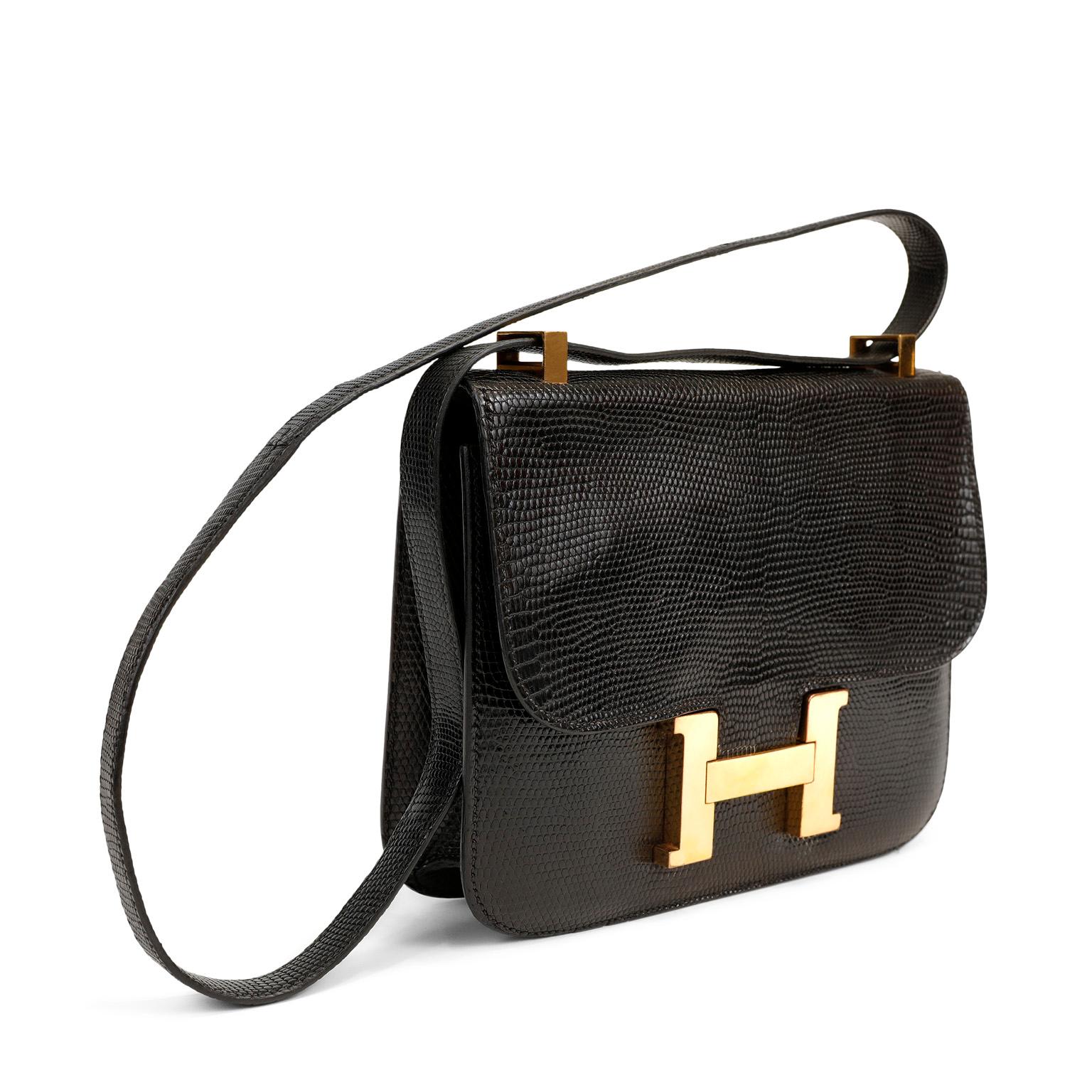
The Hermès Constance: Architectural Proportions and the Mechanics of the Monolithic H-Clasp
Designed in 1969 by Catherine Chaillet and named after her fifth child, the Hermès Constance stands as a monumental exercise in structural architectural alignment, spatial geometry, and the intentional integration of a brand monogram as a functional hardware chassis. The visual blueprint of the Constance relies on a distinct softened square silhouette, but its primary engineering achievement is the massive, central gilded or palladium-plated brass 'H' clasp that dictates the entire physical operation of the vessel. The mechanical functionality of this monolithic closure system is highly deliberate: the horizontal bar of the 'H' acts as a spring-loaded pressure release lift, securing the long front leather flap by snapping over a dual-notched internal catch. The construction of the Constance requires a complex, multi-layered structural layout known as the 'double flap pouch' assembly, where two independent internal compartments are skived, lined with premium lambskin, and then stitched to an outer shell of rigid Box calfskin or highly resilient Epsom leather. The edges of the bag undergo a rigorous manual sealing process involving up to six successive applications of organic edge dye and beeswax polishing (bichonnage) to create a flawless, glass-like protective border against moisture ingress. The suspension architecture features a continuous leather shoulder strap that slides through two parallel metal loops integrated into the upper structural spine, allowing the bag to transition seamlessly from a long single crossbody drop to a shortened double-loop shoulder orientation. From an industrial design perspective, the Constance is celebrated for its geometric purity and flawless load balancing. However, a structural maintenance analysis demonstrates that the large, flat metallic surfaces of the prominent 'H' clasp are exceptionally vulnerable to micro-scratching, hairline abrasions, and impact denting from everyday contact, presenting an inherent tension between its bold, graphic aesthetic and the practicalities of unshielded environmental wear.