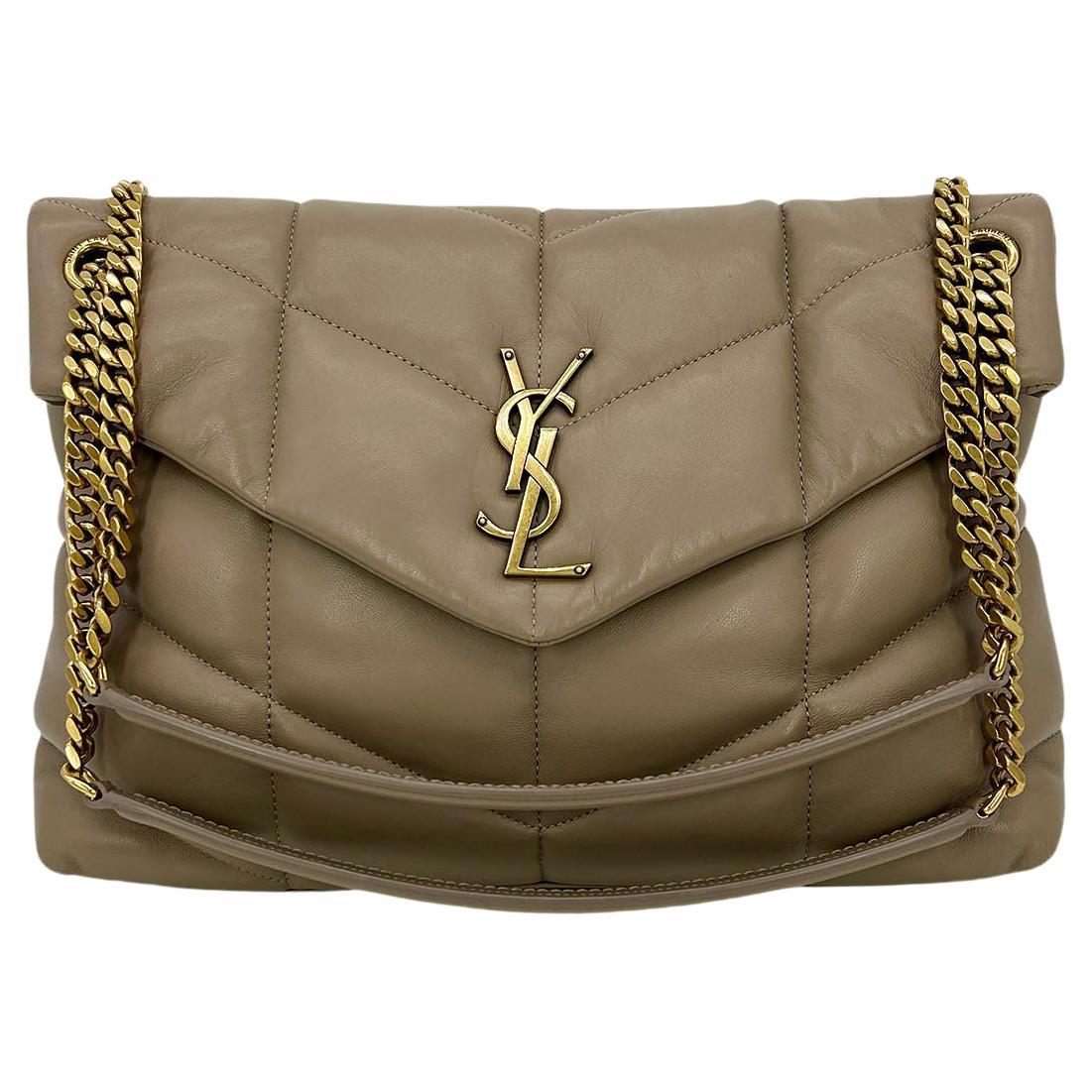
The YSL Loulou: Y-Quilting Volumetric Topology and Soft Puffer Architecture
Introduced as a tribute to LouLou de la Falaise, Yves Saint Laurent’s iconic muse known for her bohemian eccentricity and structural style, the Saint Laurent Loulou bag represents a brilliant exploration of volumetric expansion, soft tactile typography, and matelassé geometry within contemporary luxury. The structural blueprint of the Loulou relies on a soft, matelassé puffer construction, which directly rejects the hyper-rigid resin frames of mid-century bags in favor of an inviting, cloud-like envelope profile. The defining technical achievement of the vessel is its unique Y-shaped quilting pattern, which radiates outward from the central axis of the front flap. This quilting is executed via an advanced automated stitching program that injects high-density synthetic down padding between the exterior buttery calfskin skin and the inner structural interlining. This creation produces deep, three-dimensional geometric pillows that cushion internal contents while maintaining an exceptionally low unladen baseline weight. The closure features a magnetic snap lock concealed behind the iconic metal YSL interlocking monograph initial, providing a fluid, single-handed opening sequence. The suspension system combines an adjustable leather shoulder pad with an integrated metal chain link, enabling seamless transitions between a long crossbody orientation and a shortened dual-loop shoulder drop. Critically analyzed, the Loulou excels in modern everyday ergonomics, offering a highly flexible interior compartment system and superior tactile comfort against the human torso. However, a material wear analysis demonstrates that the ultra-soft, padded nature of the Y-quilting increases the overall exterior surface area exposed to friction, making the raised leather pillows highly vulnerable to surface scuffing, oil absorption, and rapid texture flattening at high-contact points over extended operational timelines.