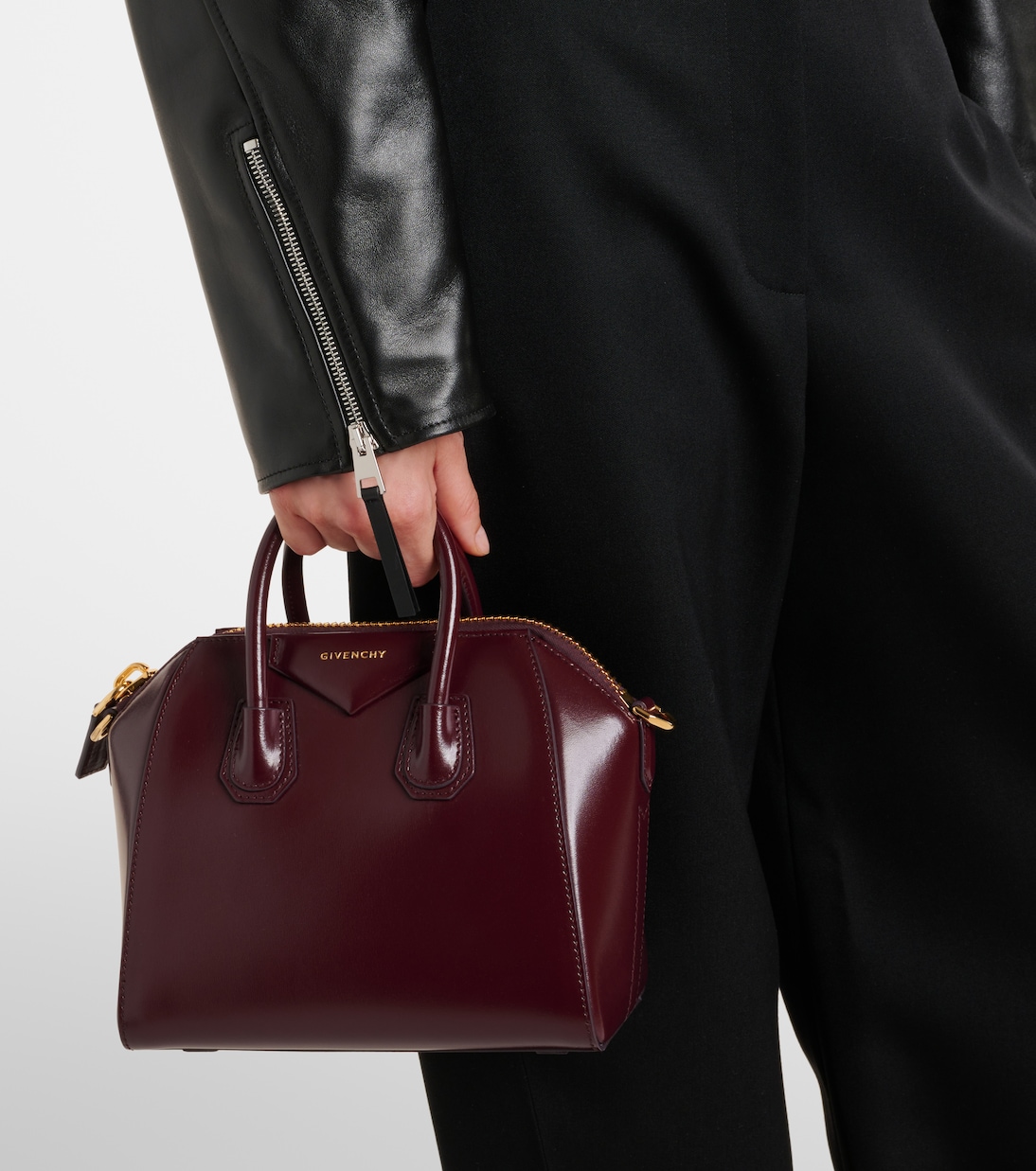
The Givenchy Antigona: Kinetic Industrial Geometry and Armor-Like Leather Sculpture
The debut of the Givenchy Antigona in 2010, designed by Riccardo Tisci, represents a powerful, masculine-leaning evolution in the structural language of luxury duffle bags, masterfully fusing traditional Boston bag geometry with hyper-rigid industrial design elements inspired by military armor and sleek automotive silhouettes. Named after the tragic Greek mythological heroine Antigone, the bag’s design language evokes themes of unyielding strength, emotional armor, and structural defiance. The architectural core of the Antigona is a heavily structured, semi-rigid pentagonal silhouette, characterized by clean, sharp vectors and an oversized, padded triangular leather envelope patch on the front panel that houses a subtle, debossed metal logo plate. The technical execution relies heavily on the utilization of Sugar or Box leather—specialized calfskins that undergo a intense vegetable tanning and heat-pressing process to achieve an exceptionally dense, smooth, and rigid crystalline surface texture that resists bowing or folding under extreme mechanical stress. The seams are constructed using an internal piping technique wrapped in heavy leather strips, creating a rigid external skeleton that maintains the bag’s precise geometric volume even when subjected to shifting internal cargo weights. The oversized, military-grade silver or gold-toned brass zippers introduce a raw tactile weight and an aggressive industrial texture that contrasts sharply with the smooth leather surfaces. Thematically and structurally, the Antigona is celebrated for its imposing presence and its unmatched durability within the high-end luxury satchel segment. However, an objective ergonomic evaluation highlights that the hyper-rigid, fixed tubular handles possess a limited radius of rotation, which can restrict quick physical access to the interior via the heavy-gauge zipper track, illustrating a design philosophy that prioritizes sculptural permanence and armor-like form over effortless physical access.